
What Is OCR (Optical Character Recognition)?
What Is OCR (Optical Character Recognition)?
In today’s fast-paced digital world, businesses are constantly looking for ways to streamline operations, save time, and reduce paper clutter. One of the key technologies making this possible is OCR, or Optical Character Recognition. Whether you’re scanning invoices, digitising old archives, or automating data entry, OCR plays a vital role in turning printed or handwritten text into digital, editable, and searchable data.
What Exactly Is OCR?
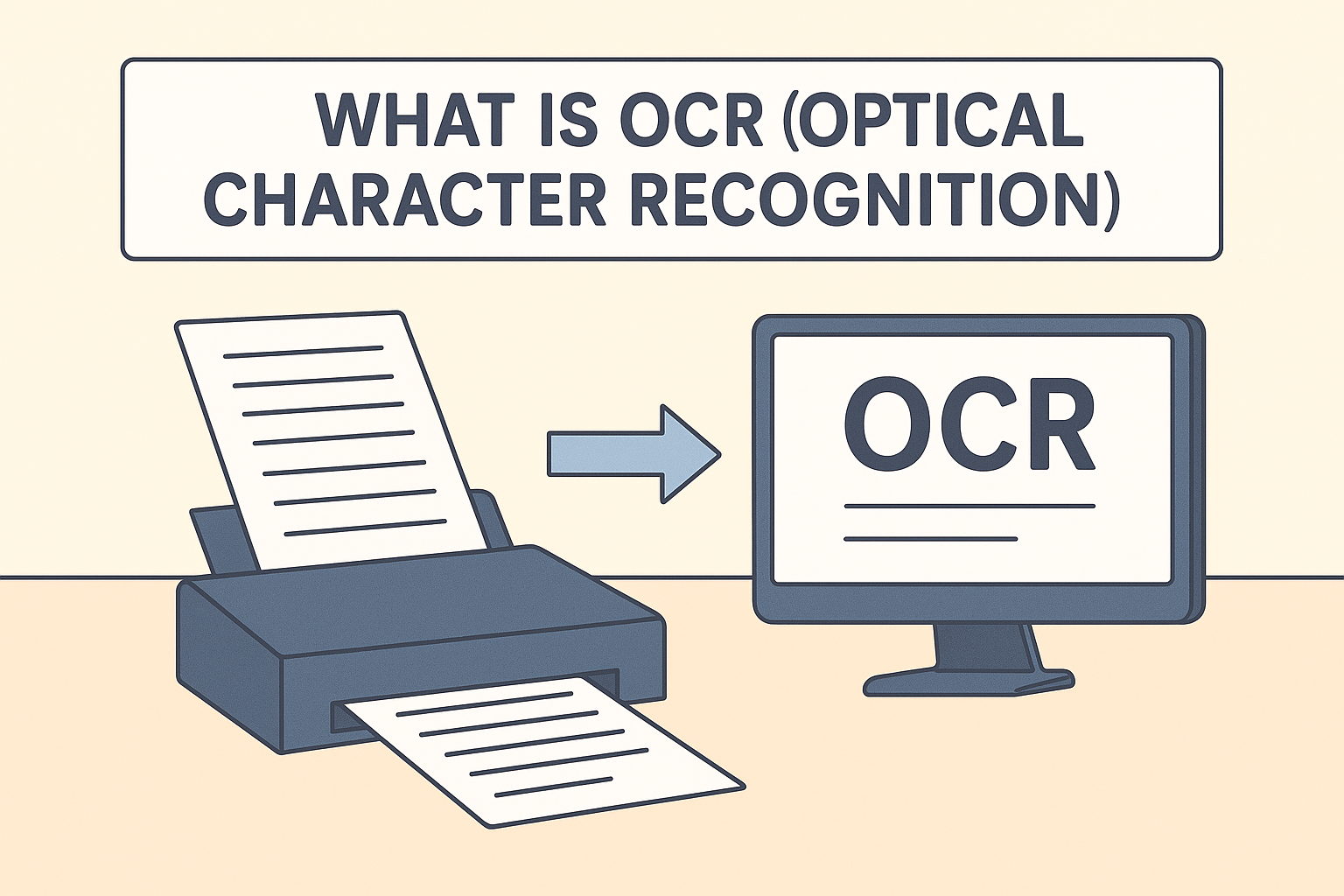
Optical Character Recognition (OCR) is a technology that converts different types of image, such as scanned paper documents, PDFs, or images captured by a digital camera, into machine-readable text.
In simple terms, OCR “reads” text from images or scanned pages and transforms it into editable digital text. This means you can search, copy, edit, and analyse information from documents that were once just static images.
How Does OCR Work?
OCR technology uses a combination of image processing and pattern recognition techniques to identify characters and words. Here’s a brief overview of how it works:
- Image Scanning – The document is first scanned or photographed to create a digital image.
- Preprocessing – The software enhances the image by correcting distortions, removing noise, and improving contrast.
- Character Recognition – The OCR engine analyses the shapes of letters and numbers using pattern and feature recognition to match them to known character sets.
- Text Conversion – Once recognised, the characters are converted into editable text formats like Word, Excel, or searchable PDFs.
Common Uses of OCR
OCR technology is used in almost every industry today. Some popular applications include:
- Document Digitisation: Converting paper archives into digital files for easy access and storage.
- Data Entry Automation: Extracting information from forms, invoices, and receipts automatically.
- Searchable PDF Creation: Making scanned documents searchable within large databases.
- ID and Passport Scanning: Used in banks, airports, and hotels for fast and accurate data extraction.
- Accessibility: Helping visually impaired users by converting printed text into speech or Braille.
Benefits of OCR for Businesses
Implementing OCR technology offers numerous advantages for organisations of all sizes:
- Saves Time and Staff Costs: Automates manual data entry tasks.
- Improves Accuracy: Reduces human error in document handling.
- Enhances Data Accessibility: Makes information searchable and easier to organise.
- Supports Digital Transformation: Moves businesses closer to a paperless office.
- Improves Compliance: Digitised documents are easier to store, manage, and retrieve during audits.
What is OCR in Document Scanning Services
At Data Solutions Group, we integrate advanced OCR technology into our document scanning solutions to ensure your data is not only digitised but also fully searchable and usable. Whether you need to archive business records, process large volumes of forms, or convert historical documents into digital text, our OCR-enabled scanning services help you unlock the full value of your information.
Final Thoughts
OCR is more than just a scanning add-on, it’s a powerful tool that bridges the gap between paper and digital data. By transforming static documents into actionable information, OCR helps businesses become more efficient, compliant, and digitally connected.
Ready to Transform Your Documents?
Now that you know what OCR is, you can see why it’s such a key part of any successful digitisation project. Let Data Solutions Group handle the hard work so you can focus on what matters, your business.
Contact us today for a free quote or consultation. We’ll be happy to walk you through the process and help you find the best solution for your documents.